Automation, AI Readiness, and IT Decision-Making Are Limited by Outdated Service Catalogs, Says Info-Tech Research Group
Canada NewsWire
ARLINGTON, Va., June 1, 2026
As IT leaders face mounting pressure to improve service delivery, enable automation, and support data-driven decision-making, many organizations continue to rely on outdated IT service catalogs that offer little strategic value. A new resource from Info-Tech Research Group explains how reimagining the service catalog as a purpose-built insight hub can help CIOs improve clarity, reduce friction, and surface meaningful operational and portfolio-level insights. The global research and advisory firm's blueprint Design a Service Catalog That Drives Insight and Innovation provides IT leaders with a practical, phased approach and ready-made tools to transform the service catalog from a static list into a strategic capability at the core of IT.
ARLINGTON, Va., June 1, 2026 /CNW/ - CIOs are facing growing pressure to support automation, AI adoption, and data-driven decision-making, yet many are discovering a critical weakness in their service. According to new insights from Info-Tech Research Group, service catalogs that were built as static lists of IT offerings are no longer sufficient for organizations that need clearer service experiences, stronger ITSM integration, and reliable data for operational and strategic decisions.
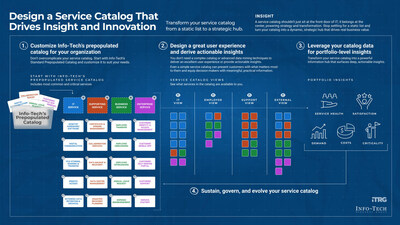
To help IT leaders modernize this foundational capability, the global research and advisory firm has recently published the Design a Service Catalog that Drives Insight and Innovation blueprint. The resource reframes the service catalog as an integrated hub that can support service delivery, enable automation, improve customer experience, and provide leaders with actionable insight into service quality, cost, demand, and performance.
"A well-designed catalog does more than list services. It helps IT orchestrate services, enables automation, and generates the actionable insights leaders need to improve outcomes," says Diana MacPherson, research director at Info-Tech Research Group. "When it is integrated with ITSM processes and organizational functions, the service catalog becomes a practical foundation for better decision-making and a clearer demonstration of IT's value."
Rather than treating the service catalog as a documentation exercise, Info-Tech recommends designing it as a management tool that supports both service delivery and strategic decision-making. According to the firm's blueprint, organizations that establish clear ownership, customer-focused service views, and meaningful service metrics are better positioned to improve service quality, identify optimization opportunities, and prepare for future automation.
Key Challenges Faced With Traditional Service Catalogs
The firm's newly published blueprint identifies several persistent challenges that limit the effectiveness of service catalogs:
- IT-centric design and language make services difficult for users to understand and navigate.
- Limited integration with ITSM and organizational processes reduces visibility into service performance and cost.
- Poor governance and ownership leads to outdated entries and low adoption.
- Underused data prevents leaders from identifying trends, risks, and improvement opportunities.
Info-Tech's Framework for Building Insight-Driven Service Catalogs
To help IT leaders transform service catalogs from static inventories into strategic tools for service delivery and decision-making, Info-Tech's blueprint outlines a four-phase methodology focused on service design, insight generation, governance, and continuous improvement.
Phase 1: Structure the Service Catalog Around Its Purpose
CIOs, service owners, business stakeholders, and support teams define the catalog's purpose, identify key outcomes, and customize a service catalog structure that aligns with organizational needs. This phase establishes the foundation for meaningful service management and future insight generation.
Phase 2: Use the Service Catalog to Present Services and Generate Insights
Organizations design customer-focused service views and analyze service information to identify opportunities to improve the service experience, support readiness, and service quality. Teams also begin evaluating services for rationalization and optimization.
Phase 3: Enhance the Service Catalog With Portfolio-Level Insights
IT leaders expand the catalog with portfolio-level data, including demand, satisfaction, costs, automation potential, and service health. These additional insights enable organizations to make informed decisions about investments, service improvements, automation opportunities, and retirement strategies.
Phase 4: Sustain, Govern, and Evolve the Service Catalog
Organizations establish governance structures, integrate the catalog with ITSM processes, define success metrics, and implement continuous improvement practices. This phase ensures the catalog remains accurate, relevant, and aligned with evolving business priorities.
The Design a Service Catalog that Drives Insight and Innovation blueprint also includes a step-by-step framework and robust supporting tools, including the Service Catalog Design Tool, Service Catalog Strategy Document, and Service Catalog Roadmap Tool. By applying insights from Info-Tech's resource, IT leaders can design a service catalog that improves service clarity, supports automation and AI readiness, and enables smarter, more transparent decisions about service investment and performance.
For exclusive and timely commentary from Info-Tech's experts, including Diana MacPherson, and access to the complete Design a Service Catalog that Drives Insight and Innovation blueprint, please contact pr@infotech.com.
About Info-Tech Research Group
Info-Tech Research Group is the "get things done" partner for over 30,000 IT, HR, and marketing leaders worldwide. The fastest growing research and advisory firm, Info-Tech enables leaders to make well-informed decisions and transform their organizations through AI, strategic foresight, step-by-step methodologies, practical tools, industry-leading advisory, and training programs. For nearly 30 years, tens of thousands of private and public organizations have trusted Info-Tech to lead their most important initiatives through periods of change and deliver outcomes that truly matter.
To learn more about Info-Tech's HR research and advisory services, visit McLean & Company, and for data-driven software buying insights and vendor evaluations, visit the firm's SoftwareReviews platform.
Media professionals can register for unrestricted access to research across IT, HR, and software, as well as hundreds of industry analysts through the firm's Media Insiders program. To gain access, contact pr@infotech.com.
For information about Info-Tech Research Group or to access the latest research, visit infotech.com and connect via LinkedIn and X.

 View original content to download multimedia:https://www.prnewswire.com/news-releases/automation-ai-readiness-and-it-decision-making-are-limited-by-outdated-service-catalogs-says-info-tech-research-group-302787507.html
SOURCE Info-Tech Research Group

