Tsinghua University Releases the First University-Wide Framework Governing AI in Teaching and Research
PR Newswire
BEIJING, Dec. 1, 2025
BEIJING, Dec. 1, 2025 /PRNewswire/ -- Tsinghua University recently released the "Tsinghua University Guiding Principles for the Application of Artificial Intelligence in Education" (Guiding Principles), the institution's first comprehensive, university-wide framework that sets systematic, multi-level guidance and norms for the use of AI across its campus.
With generative artificial intelligence now becoming increasingly prevalent in classrooms and laboratories, students are turning to AI to support learning and brainstorm new ideas, even as concerns grow over mental stagnation and reliance on technology. Faculty members are exploring new ways to integrate AI into instruction while navigating questions of ethics and appropriate use. The Guiding Principles are divided into three sections, namely, General Provisions, Teaching and Learning, and Theses, Dissertations and Practical Achievements. Together, they provide a top-level framework with detailed, scenario-based guidelines addressing key aspects of teaching and academic research.
Wang Shuaiguo, Director of the Online Education Center and primary drafter of the document, shared that the Guiding Principles also reserve ample space for future development. Beyond current teaching and research scenarios, the framework is designed to support future extensions into academic research, administrative services, and other emerging applications.
"We hope this will not become a document that restricts innovation. It should be a living system—one that continues to grow as the technology evolves," said Wang.
The General Provisions section outlines Tsinghua University's proactive yet cautious approach to artificial intelligence and sets out five core principles, namely, responsibility, compliance and integrity, data security, prudence and critical thinking, and fairness and inclusiveness. These principles emphasize that AI should remain as an auxiliary tool, with teachers and students serving as the main drivers of teaching and learning. The framework requires proper disclosure of AI use, prohibits academic misconduct, and bans the use of sensitive or unauthorized data in training or operating AI models. It also urges vigilance against AI-generated errors and calls for multi-source verification to prevent cognitive complacency from overreliance on technology. The guidelines further highlight the need to address algorithmic bias and the digital divide, ensuring that AI development and application serve the public good.
The Teaching and Learning section advises instructors to define how artificial intelligence should be used based on each course's objectives, explain the Guiding Principles to students at the start of the semester, and take responsibility for any AI-generated teaching materials. The guidelines also encourage faculty to help students develop a critical and well-rounded understanding of AI. Students are permitted to use AI as a learning aid within course boundaries but are strictly prohibited from copying or mechanically paraphrasing AI-generated text, code, or other content for academic submissions.
For graduate students, the Theses, Dissertations and Practical Achievements section emphasizes that artificial intelligence must not replace the academic training or independent intellectual work required of students. The use of AI for ghostwriting, plagiarism, fabrication, or any other form of misconduct is strictly prohibited. Supervisors are instructed to provide clear guidance on appropriate AI use and maintain oversight throughout the research process to uphold academic integrity and ensure that the work of students is original.
Developed to enable innovation rather than restrict it, Tsinghua University's Guiding Principles reflect its close study of AI's expanding role in education and its effort to build a shared academic consensus. Emerging tools such as AI-powered courses, knowledge engines, agent instructors, and campus companions have raised new questions about ethics, responsibility, and authorship in teaching and research. In summer 2024, the university began drafting the Guiding Principles through collaboration among academic and administrative departments, aiming to balance openness to technological progress with careful oversight and responsible use.
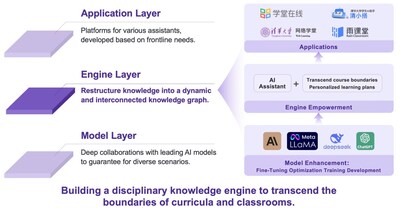
The release of the Guiding Principles marks a new phase in Tsinghua University's integration of artificial intelligence and education, shifting focus from technological advancement to institutional support. The effort builds on years of systematic work in AI-enabled teaching. Moving forward, Tsinghua plans to promote the principles through its AI literacy platform, faculty workshops, and interdisciplinary dialogue. The university aims to guide its community toward responsible and informed AI use, fostering a sustainable ecosystem for educational innovation and preparing the next generation to harness and innovate with intelligent technologies.
For the detailed Guiding Principles for the application of AI in Education from Tsinghua University, please visit https://www.tsinghua.edu.cn/en/ and its official pages on Facebook https://www.facebook.com/Tsinghua, LinkedIn https://www.linkedin.com/school/tsinghua-university/, X https://x.com/Tsinghua_Uni, YouTube https://www.youtube.com/c/TsinghuaUniversity_official, and Instagram https://www.instagram.com/tsinghua_uni/.
 View original content to download multimedia:https://www.prnewswire.com/news-releases/tsinghua-university-releases-the-first-university-wide-framework-governing-ai-in-teaching-and-research-302628933.html
SOURCE Tsinghua University

